

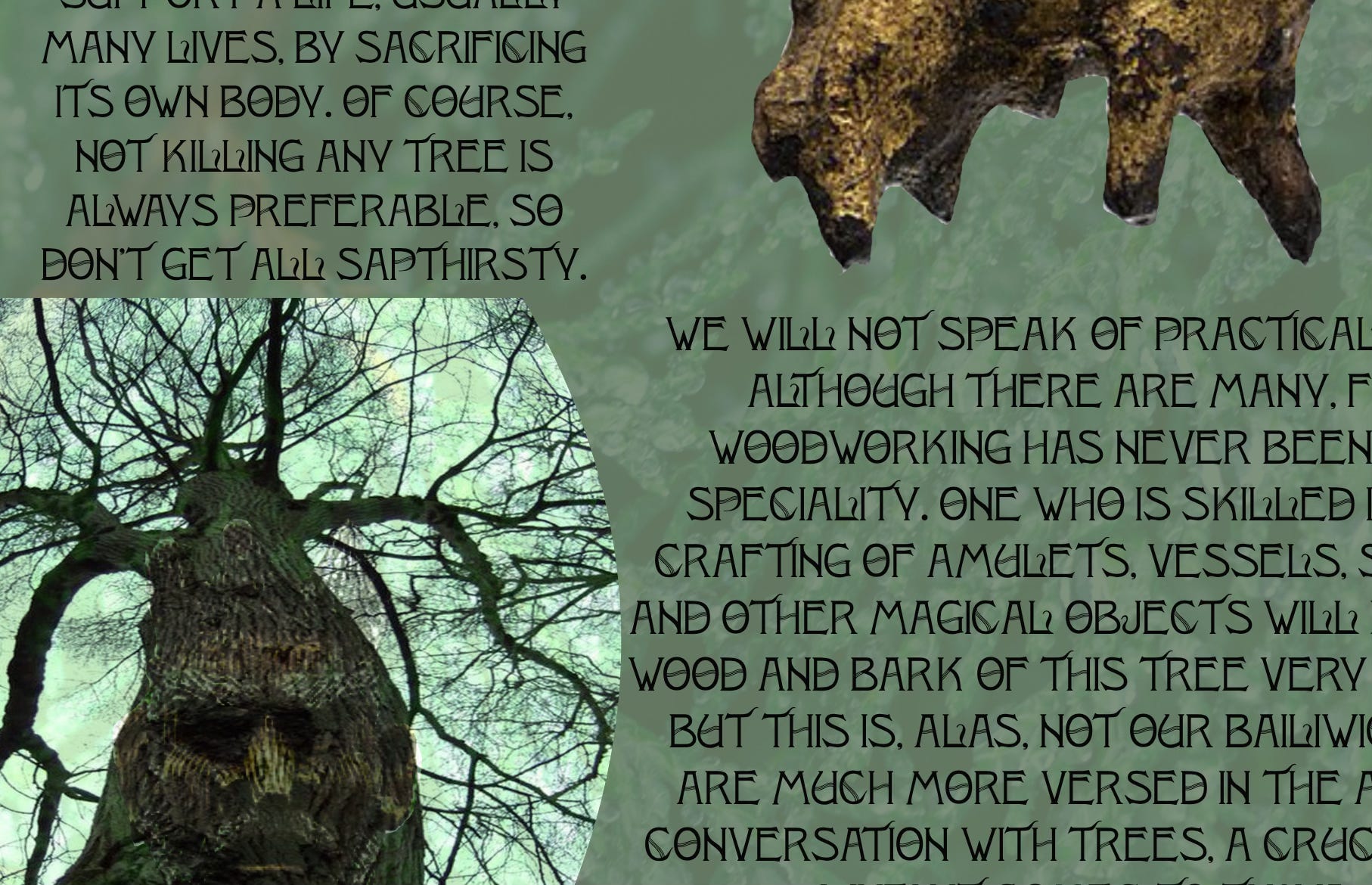
The Tree of Life, a well deserved title. Not with the same fecund fertility as the Pomegranate, but in the sense that it will support a life, usually many lives, by sacrificing its own body. Of course, not killing any tree is always preferable, so don’t get all sapthirsty.
We will not speak of practical uses, although there are many, for woodworking has never been our speciality. One who is skilled in the crafting of amulets, vessels, staves, and other magical objects will find the wood and bark of this tree very useful. But this is, alas, not our bailiwick, we are much more versed in the art of conversation with trees, a crucial art when it comes to Thuja.
While most trees are subject to the occasional indwelling spirit, Thuja are more susceptible than most because the tree is by nature so helpful and hospitable. It will generally give itself as home to any stray spirit.
It is, of course, polite to ask any plant for permission before you harvest from it. Most plants won’t mind if you don’t, but there are a few varieties that will withhold magic if permission is not gained before harvesting. Others will taint the material they give to ensure random or bad results. As I can never remember which species are the feisty ones, I always ask. A simple “Green child of The Mother, may I harvest of you for magic?” Wait for that warm feeling or for the quiet spiritual whisper, then say, “I thank you for your generosity and I wish you well.” If you are harvesting roots, which will result in the death of the plant, say, “Green child of the Mother, will you give me your life?“ Again, wait for the sign, and then thank the plant for its sacrifice. I suppose it’s possible a plant would say no to your polite requests, but it’s never happened to me.
Thuja requires the same deference, however, as ancient and kindly trees, they also like to hear about you, what you’re up to, how life is. Just a little light small talk. Be sure to ask about them as well, they may have stories to tell, listen politely and find joy in the telling.
Now, if a spirit lives in the tree, the process will be different.
First, how do you know a spirit lives in a tree?
There are usually Signs.
Bad Spirits in a tree:
-bleeding bark
-foul odors
-withered or many dead limbs or branches
-creaking or other strange noises
-a malaise surrounding the tree
-mist that really shouldn’t be there
-rude words appearing in the bark
How to Speak to bad Spirits:
“Excuse me, I need to use part of your vessel for magic, is this permitted? And will you guarantee I’ll get the magic I seek?” Listen, bad spirits love to talk, you’ll hear the response, probably along with curses or jibes, keep your cool. Be prepared to walk away empty handed. Do not harvest if you’ve been told anything other than a clear yes. You will likely not make it out of the forest alive.
Good spirits in a tree:
-very healthy
-a bit of a glow
-light, airy music
-giggling
-very touchy, as in will reach out to touch you, caress, or hold you (be patient here, do not try and run)
How to talk to good spirits in a tree:
“Hello there, you’re looking well, may I harvest some of your vessel for magic, and will you guarantee I’ll get the magic seek?” Good spirits are less chatty, they tend to open their boughs, stretch a branch toward you, glow brighter, sparkle. They always say yes.
Thuja Tea
Use in moderation, can cause convulsions. In small amounts, will open the mind and the senses, lifting the spirit and facilitating second sight. To make the tea, gather a handful of fresh leaves, put them in a mug or tea pot and pour boiling water over them. Allow to steep for five minutes. Then wait, you’ll either feel wonderful or terrible, such is magic sometimes.