

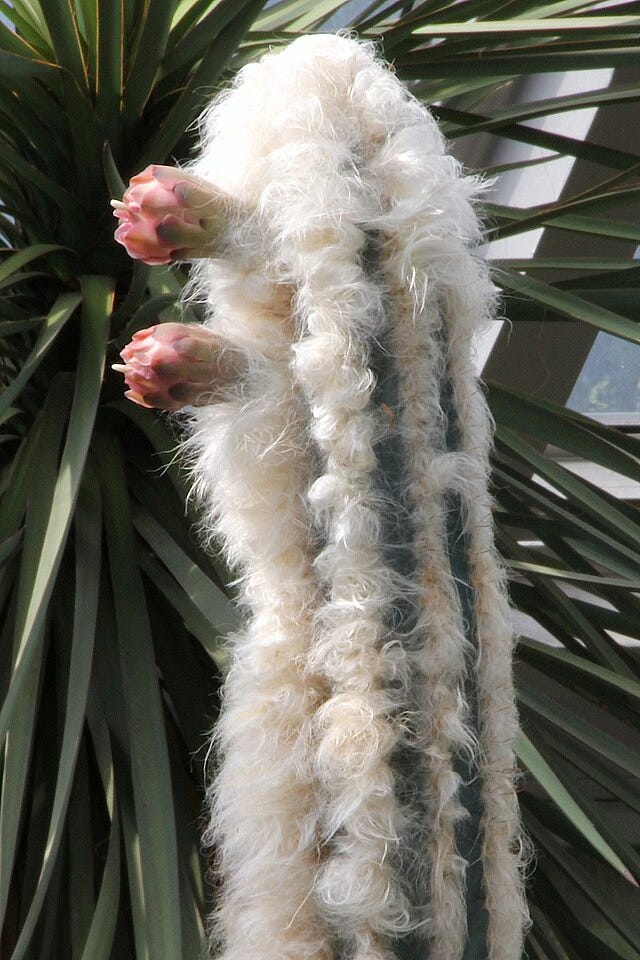
Most places you look up this cactus family will tell you that their name, Pilosocereus, means hairy cereus. Such lazy writing. What’s a cereus? Just takes a quick Google Translate of the Latin to find out it’s a candle. So we have a hairy candle cactus. See that’s super helpf- hold on what? A hairy candle cactus?
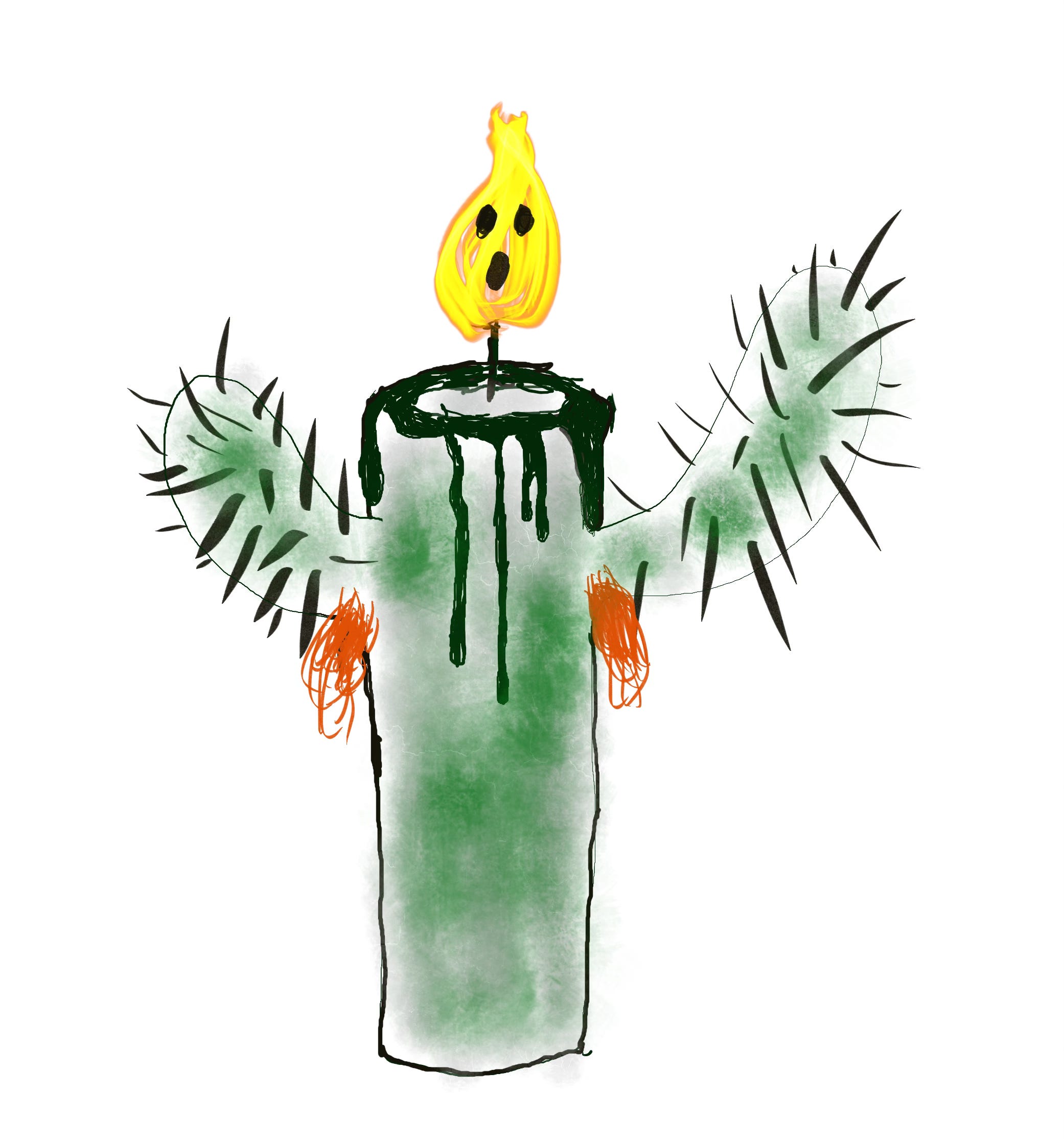
IDK, this is what I pictured… A green candle with saguaro-type arms and ginger armpit hair. One of these days I’m gonna learn how to draw…
But actually it’s more like this:
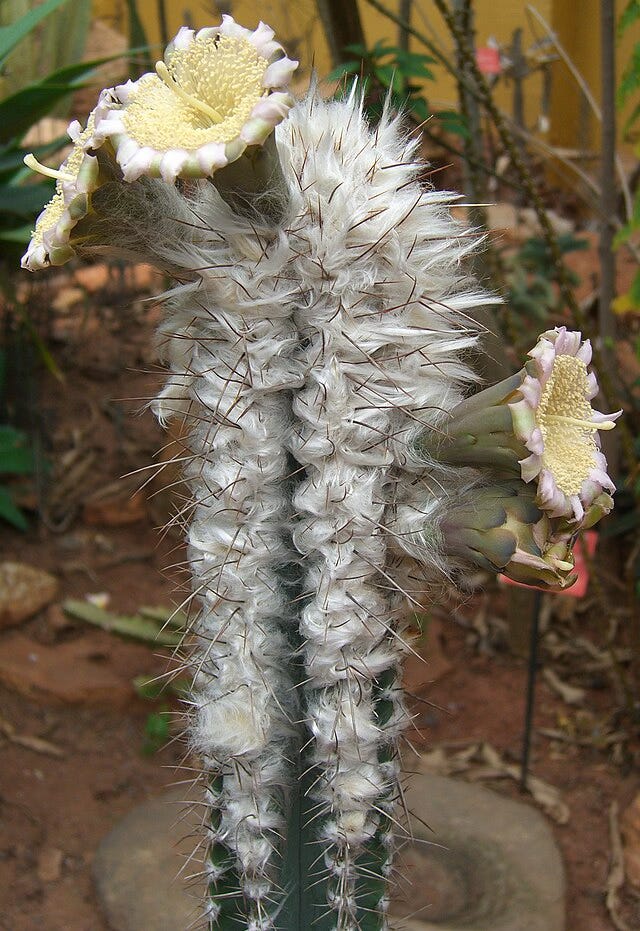
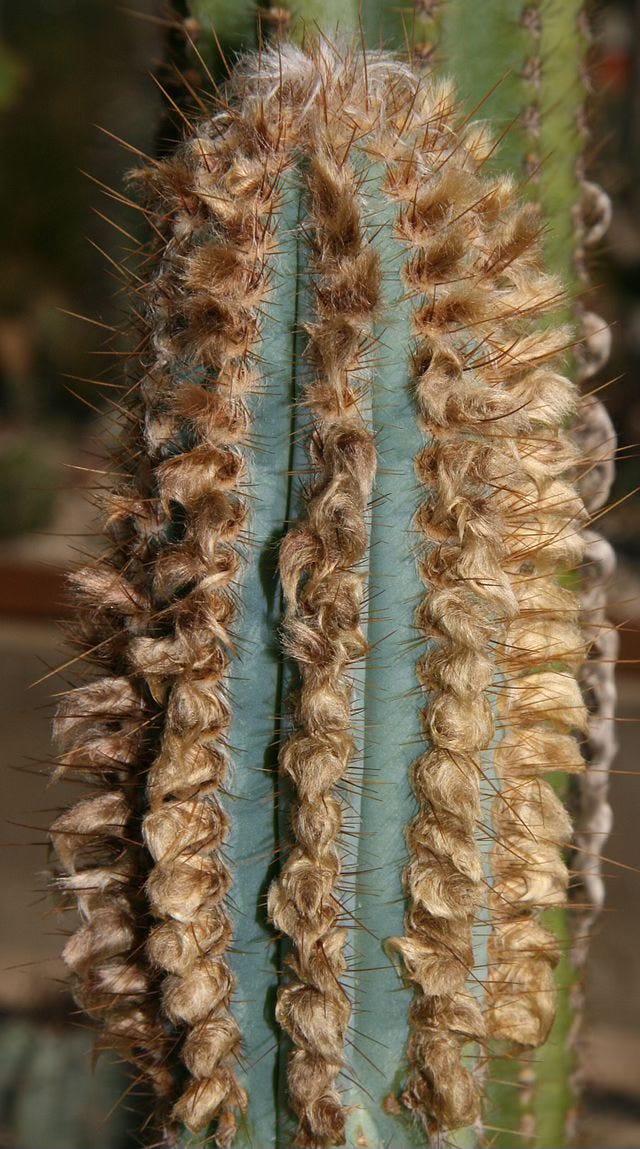
Pilosocereus leucocephalus (pictured above) is the species type and thus exemplifies this genus. A tall, pillar cactus that, yeah, does grow hair. The hair is actually clusters of modified spines that grow in either soft clumps or in a kind of webbing around the cactus. So why do they grow hair? Are they going to grow feet and lungs and voice boxes in some distant evolutionary nightmare?

I’m no expert, but I’m going with no. Then again, plants do some surprising things… Pilosocereus are found from Central to northern South America and tend to grow in environments where temperatures can fluctuate wildly between scorching days and freezing nights and rainfall can be naught but a once in a year deluge, hair can help them cope with these extreme conditions. Lush cactus locks can protect tender flesh from sunburn, light frost, and can catch and conserve moisture from dew. Some cacti grow hair around flowers or new growth to protect young buds from the sun, these growths are called cephalium.
So what else has Pilosocereus got for us? It’s not a huge genus but there are a few notables among the bunch.
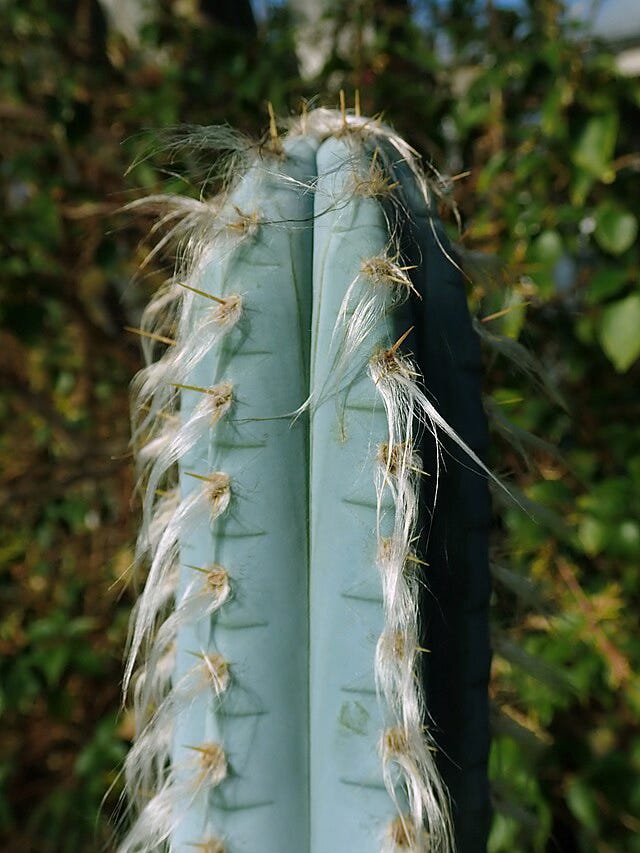
Pilosocereus pachycladus: Used as food and medicine in Brazil, namely to treat urinary infections and prostate enlargement.
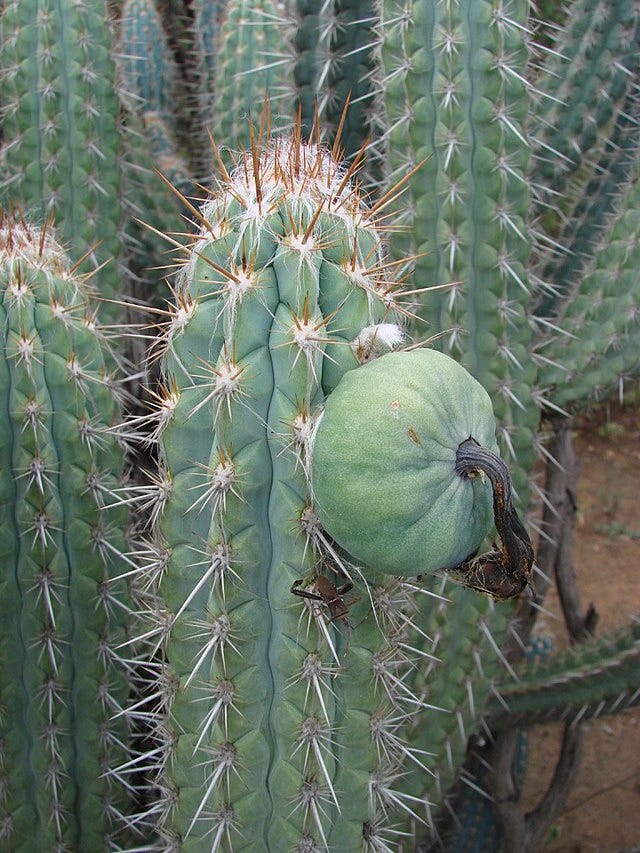
Pilosocereus gounellei: It’s fruit is high in magnesium, iron, zinc, potassium, manganese, and sodium.
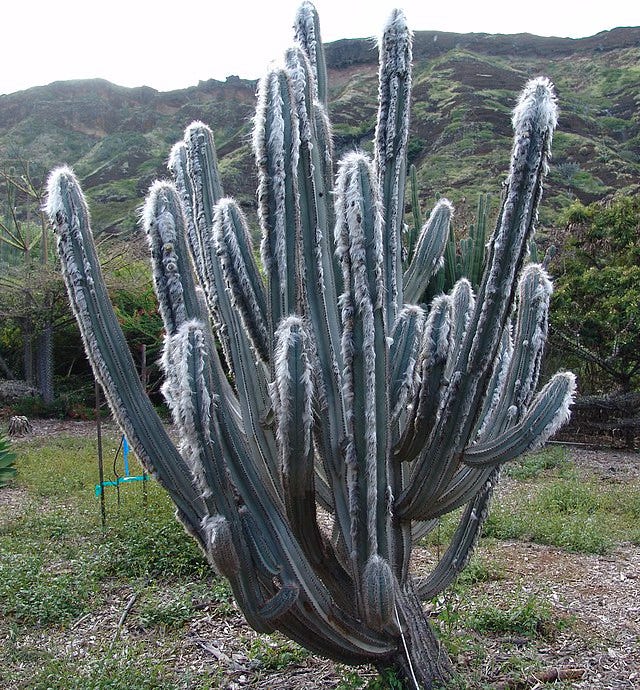
Pilosocereus leucocephalus: Is a keystone species in Central America, where it is abundant and supports several other species by providing food and habitat.
There are some stunners, too. Like Pilosocereus magnificus and Pilosocereus fulvilanatus.


Plus the kind of weird Pilosocereus machrisii.
There’s even the tragic Pilosocereus millspaughii, which earned the unfortunate distinction of being the first plant known to become extinct due to sea level rise in the United States in 2024. The cactus still exists in botanical collections, but now grows nowhere in the wild.

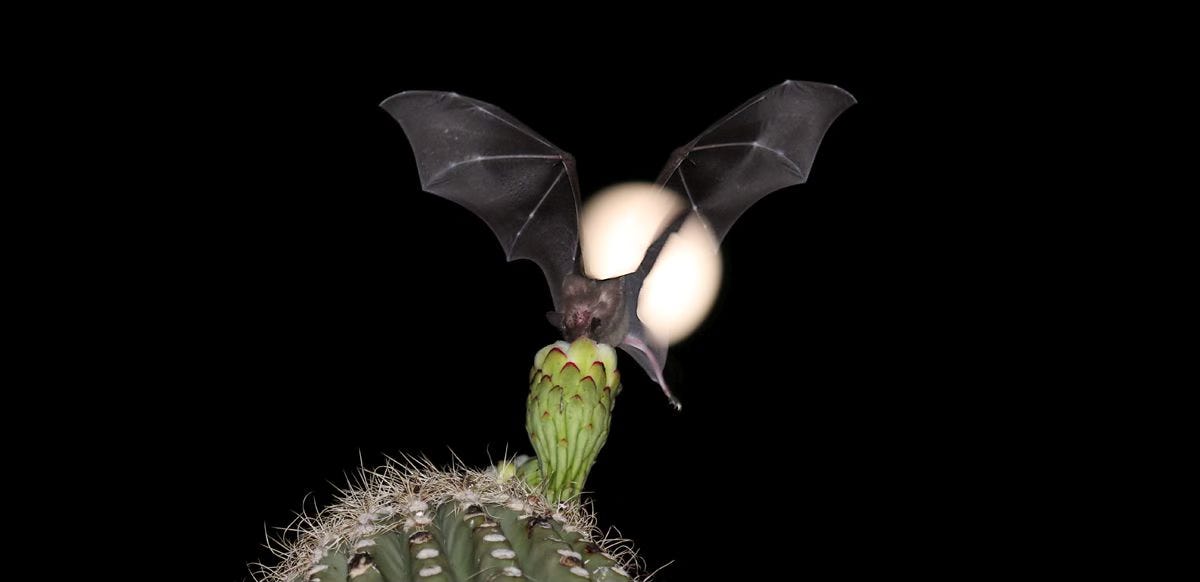
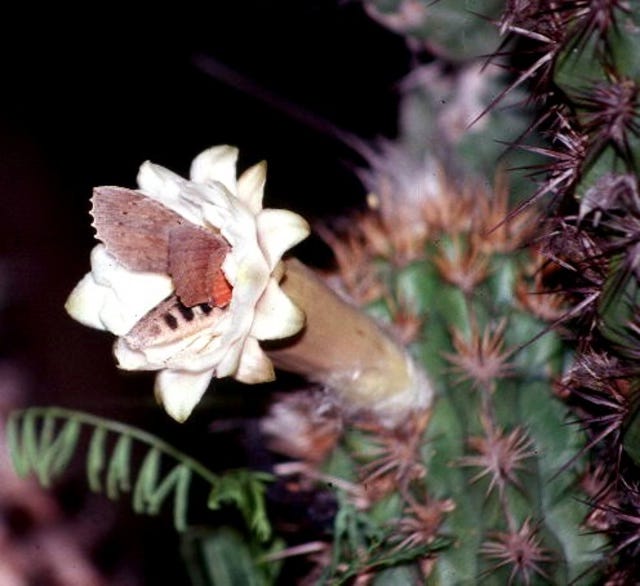
But maybe my favorite thing about this group of cacti is that they’re chiropterophilous, that is, they’re bat lovers. Species in the genus Pilosocereus can be pollinated by a number of animals, but are largely pollinated by bats and moths and have night blooming flowers that tend to be light in color and smell like garlic, or other pungent odors to attract these nocturnal feeders.
Hey there! Here’s how plant horror in the coven works:
First week of the month - The Lab (that’s this post!) - Free for everyone.
Second week of the month - The Witch Lab (a short, horror piece from a plant witch’s journal detailing one of her experiences helping (I use the term loosely) a client using the featured plant of the month - New episodes are free! The back catalogue is going to remain paywalled largely because un-paywalling it is time consuming and I am busy doing horrifying things.
Third week of the month - The Grim Grimoire (an entry from The Witch’s spell book detailing how she uses this plant for her dark magic including spells, chants, recipes, instructions, and more). The text version of this will be free, but a digital zine version will go out to paid subscribers. The back catalogue will remain paywalled for the reason stated above.
Fourth week of the month - 100% Plant-Based Horror story featuring the month’s plant. These are longer stories that include everything from ghosts, to parasites, aliens, experimental supplements, monster trucks, extinct species, serial killers, and more! - Paid subscribers only, here’s a freebie you can read to check it out!