


Magnolias are some of the most ancient flowering plants on the planet, with fossils dating as old as ninety-five million years. Scientists have used computer models to trace flower evolution back to the first flowers, and they think these flowers would have had a structure similar to magnolia flowers.
Here’s a little plant timeline. Life on Earth began in the water, and plants are no different, with photosynthetic algae giving rise to mosses and other bryophytes that would have lived close to water, but not in the water. To colonize the land, plants needed a vascular system that could carry water from sources underground to stems, branches, and leaves. The first vascular plants were called gymnosperms, these are today’s conifers and cycads, like pine trees and sego palms (not actually palm trees) respectively. Gymnosperms don’t have flowers or fruit, instead they have cones. Each cone is made up of scales that protect a seed. When the seeds are mature, the cone will open so the seeds can be dispersed.
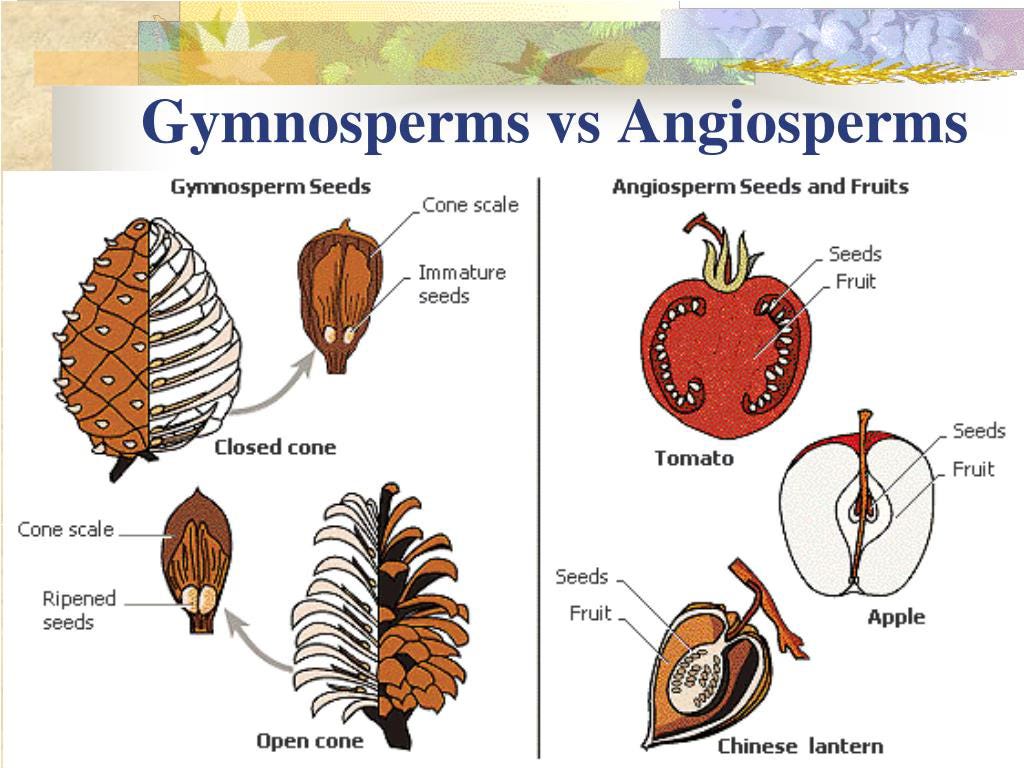
Magnolia fruit looks very much like a gymnosperm’s cone when it first develops from the flower. As it matures and dries, the cone-like fruit will open at each scale and a seed pops out. These fruits are classified as aggregate fruits, like blackberries, raspberries, or strawberries. None of these are actual berries, by the way, a berry must have several seeds inside a fleshy fruit, like blueberries, tomatoes, and oranges. If you picture a strawberry, those little seeds are on the outside of the fruit, ergo, an aggregate fruit.


So it’s the flower that differentiates the magnolia from the early vascular plants, conifers and cycads. These early flowers would have been pollinated by beetles, because bees hadn’t evolved yet. This is probably why magnolia flowers tend to be cup or bowl shaped and have thick tepals.
Ok, quick aside, tepals are more evidence that the magnolia was one of the first flowering plants. In flowers that are evolutionarily younger, there are structures known as sepals underneath the flower’s petals. While the petals are white or brightly colored, sepals tend to be green. When it isn’t possible to differentiate between the sepals and the petals, then both structures are called tepals.


So back to the beetles. Magnolia flowers have some interesting behavior to aid in pollination. They will open during the day and attract beetles with a strong scent. As night falls, the flower closes, trapping any beetles that are resting there. Magnolia flowers are hermaphroditic, meaning the flowers have both male and female sex organs. Flowers close up at night and as the tepals raise, the female sex organs open to accept any pollen that the beetles may have carried in from a different flower. As morning approaches and the plant senses that it’s getting lighter, the female parts will close and the male parts open to deposit pollen on the beetle. Then the flowers open and release the little prisoner, who will hopefully fly to another flower and pollinate it.
Magnolias are native to both East and Southeast Asia and North and Central America and have a long history of both medicinal and culinary use. As far back as at least two-thousand years ago, the Chinese were using magnolia to treat anxiety, depression, insomnia, asthma, seizures, allergies, and chest colds. These uses are also supported in Japan, and on the opposite side of the world in Mexico and by several indigenous peoples. Magnolia’s neuroprotective effects have been studied by scientists and seem to validate these uses, but more studies are needed to determine the best use for this plant.
Magnolia buds and tepals are said to have a spicy, sweet flavor reminiscent of ginger and cardamom and they are used in a wide variety of ways. They can be baked, fried, added to salads, pickled, used to flavor sugars, made into cordials… pretty much anything you can think of. You can also chew on the bark to help relive the symptoms of withdrawal from things like cigarettes and sugar.
Having such a long history, it’s no surprise that magnolia are found in folklore and myth all over the world. In Plant Lore, Legends, and Lyrics by Richard Folkard Jr. (1884), the author, perhaps conflating the plant’s use as a sleeping aid, says that the scent is so strong that one flower placed in the bedroom at night is enough to kill a person. It isn’t, but I love to include these silly bits of folklore, especially when I can find other folklore that directly contradicts it. As in Cunningham’s Encyclopedia of Magical Herbs which states that one should put a magnolia flower on or near the bed to encourage your partner’s faithfulness. I suppose it’s difficult to step out on a lover when you’re dead?
In one Japanese folktale I found, a fox tricks a man into becoming a priest by placing a large magnolia leaf over its head, thereby turning itself into a woman. It then used duckweed to form a baby. The man had been watching this and threw a rock at the duckweed baby, killing it. When the (fox)woman broke down in hysterics, the man scoffed, telling her that he knew she was a fox. But she continued sobbing, mourning her baby with such intensity, that the man started to doubt that what he’d done was right. The (fox)woman, in culmination of an epic gaslighting session, convinced him to become a priest to atone for his crime. The woman took him to a temple where another priest shaved his head as part of his initiation. The shaving was intensely painful, brining the man to his senses. The priest disappeared, the temple disappeared, and the woman was gone. The man was bald, however, because the fox had chewed off his hair. I guess… don’t throw rocks at babies, even if they’re made of duckweed and their mother has a magnolia leaf on her head.

Also in Japan, certain miko, or Shinto shrine maidens, called Zatokaka, would use beads made of magnolia wood to heal sick babies.
They also used the bowl of water and dead leaf, plus a rosary called mokorenji -magnolia. If a child was born and was sick, it was placed under the protection of a Zatokaka. A rosary bead from the miko’s rosary was attached to the child’s clothing and became the protector of the child.
-From a 1962 issue of the Journal Folklore Studies, written by William P. Fairchild
This certainly invokes the long-held belief in the healing power of the magnolia.
In an Indian folksong, a woman laments that her husband has brought a co-wife into the home. She says she could understand him doing this if she were ugly or barren or had a sharp tongue. Or:
If I had crippled arms, you could have brought a co-wife,
I have arms like the branches of magnolia, why have you brought her?
From a 1985 issue of the Journal Asian Folklore Studies by Manju Bahtnagar
Here the magnolia is meant to evoke grace and beauty. And they certainly are as beautiful, and useful, as they are ancient. Co-wives (or husbands, I don’t know your life) I feel like should be a joint decision, though…
And that’s the magnolia, ancient, lovely, and useful.

Hey there! Here’s how plant horror in the coven works:
First week of the month - The Lab (that’s this post!) - Free for everyone.
Second week of the month - The Witch Lab (a short, horror piece from a plant witch’s journal detailing one of her experiences helping (I use the term loosely) a client using the featured plant of the month - New episodes are free! The back catalogue is going to remain paywalled largely because un-paywalling it is time consuming and I am busy doing horrifying things.
Third week of the month - The Grim Grimoire (an entry from The Witch’s spell book detailing how she uses this plant for her dark magic including spells, chants, recipes, instructions, and more). The text version of this will be free, but a digital zine version will go out to paid subscribers. The back catalogue will remain paywalled for the reason stated above.
Fourth week of the month - 100% Plant-Based Horror story featuring the month’s plant. These are longer stories that include everything from ghosts, to parasites, aliens, experimental supplements, monster trucks, extinct species, serial killers, and more! - Paid subscribers only, here’s a freebie you can read to check it out!
Very interesting science and lore about my favourite tree!
thats been such a delight to read!
I love magnolias! the flowers look unreal.
i confess i did start by thinking up terrible puns/jokes for gymnosperm and angiosperm.
yes.
i know.
bad toad!
lovely article honeygloom 😎